What are some breastfeeding benefits for baby?
Breast milk is the ideal nutrition for baby as it contains antibodies to help build baby’s immune system and is ever-changing to suit baby’s caloric and macronutrient needs. Exclusive breastfeeding for the first 6 months of life has been shown to reduce ear infections, development of asthma/obesity later in life, and can lower the risk of Sudden Infant Death Syndrome (SIDS).
What are some breastfeeding benefits for mom?
Research has shown a lower risk of breast/ovarian cancer, diabetes, and high blood pressure in breastfeeding mothers. Exclusive breast feeding can delay the return of menses and contributes to bone health. Feeding directly at the breast is cost-effective and promotes bonding of baby and mother.
When will my milk come in?
Typically, 2-5 days after birth. Prior to this, colostrum is present to nourish baby at the breast.
How do I know if I am making enough milk?
Signs of adequate milk production include (but are not limited to): adequate weight gain for baby, copious wet and soiled diapers, baby seeming satisfied after feeds, sensation of fullness of breasts between feeds.
Are there ways to increase my milk supply?
The most effective way to increase milk supply is frequent, effective removal of milk from breasts and skin-to-skin contact with baby.
What are signs that baby is hungry?
Rooting (turning face toward milk source), putting hands in mouth, hands in tight fists. Fussiness or crying may be a later hunger cue or a sign of another unmet need.
What are signs that baby is full?
Relaxed hands and body, calm demeanor, unlatching from breast. Some babies may fall asleep as well after a full/satisfying feed.
How long should baby feed at each breast?
While there is no “correct” duration, 15-30 minutes is typical for younger babies- this duration may shorten as they become older and more effective at milk removal. Longer feeds may indicate that baby is having non-nutritive suckling for comfort, whereas shorter feeds may indicate that not enough milk was removed from the breasts.
How often should I be feeding my baby?
It is recommended to nurse the baby on demand-following hunger cues. Typically, we expect a baby to nurse about every 2-3 hours-including overnight! Baby should not go longer than 4 hours without a feed and your provider will advise you if baby needs to be woken overnight for feeds (if sleeping longer stretches) based on their individual needs.
Can I use a pacifier if my baby is breast fed?
Yes! It is recommended to wait until breastfeeding is well established-this timeline may vary. Some sources indicate the appropriate time to introduce is after 1 month of age. Per the AAP, the use of pacifiers during naps and bedtime can help reduce the risk of Sudden Infant Death Syndrome (SIDS).
Is breastfeeding painful?
No! If latching or feeding at the breast/chest is painful, oftentimes there is an underlying issue that can be addressed and resolved.
Can I drink coffee/caffeine while breastfeeding?
Yes! While caffeine does pass into breast milk, the amount received by the baby is very small. Per the CDC, 200-300 mg (or 2-3 cups of coffee per day) is considered safe in lactating individuals.
Can I drink alcohol while breastfeeding?
Abstaining from alcohol is the safest option while breastfeeding. However, the CDC is a great resource for more specific information regarding the safety of alcohol use during lactation. (https://www.cdc.gov/breastfeeding-special-circumstances/hcp/vaccine-medication-drugs/alcoho l.html#:~:text=Safety%20concerns-,Not%20drinking%20alcohol%20is%20the%20safest%20opti on%20for%20breastfeeding%20mothers,a%20single%20drink%20before%20nursing.)
Are there certain medications that should be avoided while breastfeeding?
Yes. It is important to alert your care providers that you are lactating to assure any treatments prescribed to you are compatible with breastfeeding. Medications may be searched by name by yourself or your provider here: (https://www.ncbi.nlm.nih.gov/books/NBK501922/)
Which position is best?
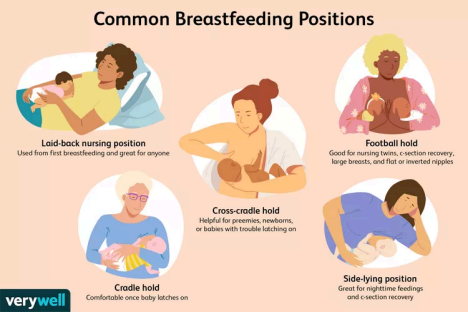
The position that works best for you and is comfortable for both mother and baby! ; credit:https://www.verywellfamily.com/common-breastfeeding-positions-431648
Should I be pumping?
Initiation of pumping (if desired) is recommended after the breastfeeding relationship is established. Pumping may be indicated earlier if there is need for supplementation in the setting of inadequate weight gain, or if separation of mother/infant is anticipated. Otherwise, this is a personal choice and depends on many factors. Our lactation counselors are available to discuss your specific needs and to create a personalized pumping plan for returning to work if desired.
How do I know if my pump flanges fit?
Pumping should not be painful and flanges should not feel too tight or too loose around the nipple. Incorrect flange size can decrease output of milk while pumping and create nipple trauma and pain. If you are unsure, we are able to measure for you in the office to assure appropriate fit.
How do I store expressed milk?
How long should I plan to breastfeed?
Every drop counts! This is a very personal decision and we can assist you to meet whatever goals you have set for yourself and your baby. “For the best health outcomes, the American Academy of Pediatrics (AAP) recommends exclusive breastfeeding for approximately 6 months followed by continued breastfeeding with complementary foods for at least 2 years and beyond as mutually desired.”
Where can I seek help with breastfeeding?
Lactation consultations are available at Flanders Pediatrics by appointment. Stay tuned for announcements regarding upcoming breastfeeding support gatherings at the office! Online resources: La Leche League, https://www.nutrition.gov/topics/nutrition-life-stage/breastfeeding, CDC, AAP, healthychildren.org
What are the credentials of the lactation care providers in your office?
Katie Grigg, DNP, APRN, FNP-C, CLC is a certified lactation counselor. Stephanie Adams, MS, APRN, FNP-BC, CLC is a certified lactation counselor currently undergoing additional clinical/didactic training to sit for the IBCLC (International Board Certified Lactation Consultant) exam.
What can I expect at my lactation consultation?
At Flanders Pediatrics, you will be paired with a skilled clinician for a consultation. Visits take place in one of our exam rooms to assure comfort and privacy. Visits are booked for 30 minutes but may require more time depending on your unique situation. Baby’s weight and vital signs are obtained by a medical assistant. Typically, the consultation will begin with questions about your concerns, goals, and reason for seeking lactation consultation. Following this, a feed at the breast/chest is observed to assess the breastfeeding (it is helpful if baby is hungry and ready to feed for this consultation but not required!). A Boppy/My Breast Friend pillows are available for your use to assist with comfort and positioning if desired. The majority of consultations are hands-off and your consent is always obtained before any intervention that requires touch of baby/mother. Support person/family always welcome! After observation of a feed, your provider will make suggestions and explain their assessment findings in detail. Follow-up appointments will be discussed and scheduled as indicated. Questions are welcomed and encouraged. Providers are available in the office, by phone, or through our secure portal for questions or concerns following your consultation.